If you’ve ever typed “Brasil” into a search bar and wondered whether autocorrect was about to embarrass you, you’re not alone. This mix-up shows up constantly — in emails, school essays, social captions, and even sports headlines during World Cup season. The good news? The answer is simple once you know the reason behind it.
This guide breaks down exactly when to use each spelling, why both exist, and how to avoid the small mistakes that trip up even confident writers.
Quick Answer
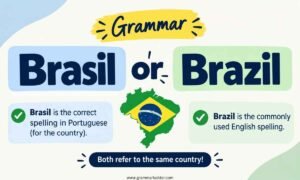
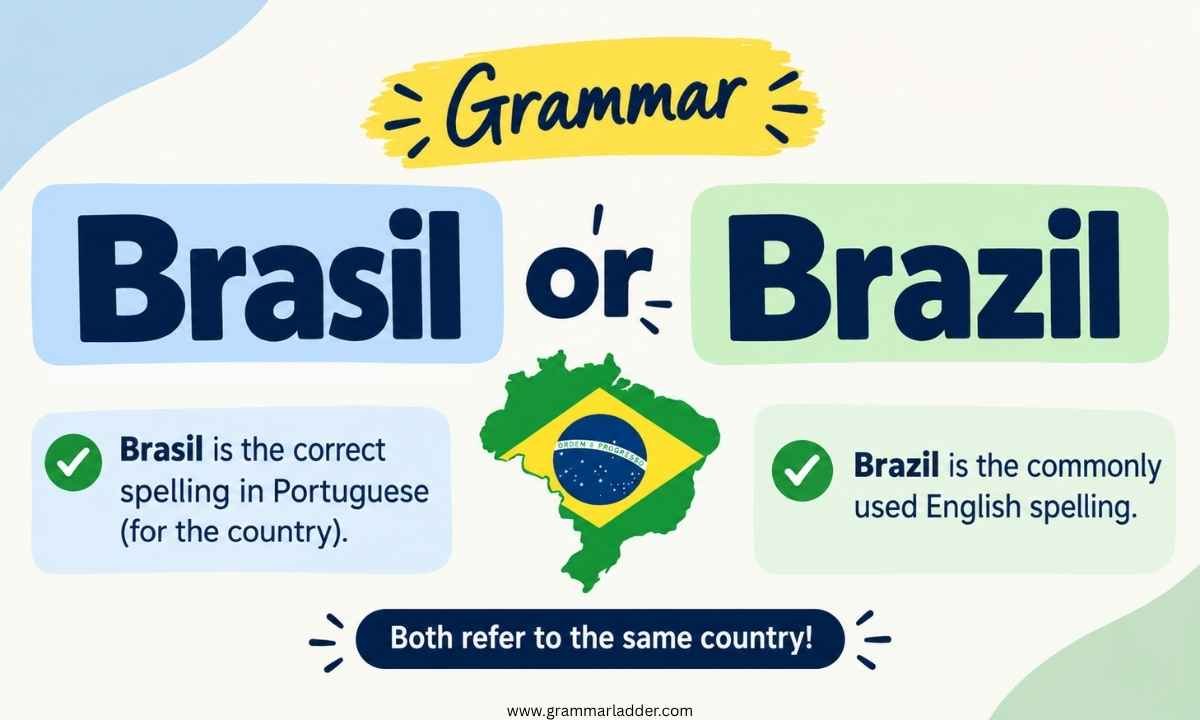
Brazil is the correct spelling in English. Brasil is the correct spelling in Portuguese — the country’s own official language.
Both words refer to the same country in South America. There is no second nation, no regional split, and no “wrong” version between the two — only two languages describing one place.
- Writing in English? Use Brazil
- Writing in Portuguese? Use Brasil
That’s the whole rule. Everything else in this guide is context to help it stick.
Simple Origin and Background
The name traces back to a tree, not a person or a myth, as many assume. Portuguese explorers who landed on the coast in the early 1500s found large amounts of a hardwood tree they called pau-brasil, prized across Europe for the deep red dye extracted from it. The tree’s name came from “brasa,” the Portuguese and Spanish word for ember or glowing coal, describing the reddish color of the wood.
Over time, traders and mapmakers stopped referring to “the land where brazilwood grows” and simply started calling the territory by the wood itself. The land was named “Terra do Brasil,” or Land of Brazilwood, and that name eventually replaced earlier labels used by European explorers.
When the word crossed into English, it followed normal English spelling habits — much like how Lisboa became Lisbon or Moscou became Moscow. The “s” softened into a “z” sound, and English writers adjusted the spelling to match, giving us “Brazil.” Portuguese never changed; it kept the original “Brasil,” and it still uses that spelling today, including in the country’s formal name, República Federativa do Brasil.
Interestingly, this makes Brazil one of the very few countries in the world named directly after a tree rather than a person, region, or geographic feature.
The Clear Difference Between Brasil and Brazil
The difference isn’t about right versus wrong — it’s about language, plain and simple.
- Brasil — the native Portuguese spelling, used inside Brazil, in Portuguese-language media, and on official Brazilian government documents.
- Brazil — the English spelling, used in English-language news, textbooks, business writing, and everyday conversation.
A helpful detail: even in English, the capital city keeps the Portuguese spelling — Brasília — not “Brazilia.” That single exception trips people up more than almost anything else related to this topic, so it’s worth remembering as its own special case.
Comparison Table
| Feature | Brasil | Brazil |
| Language | Portuguese | English |
| Used officially by | Brazilian government, Portuguese-language sources | English-speaking countries, global media |
| Pronunciation | “brah-ZEEW” (soft, native accent) | “bruh-ZIL” |
| Common context | Local news, Brazilian brands, Portuguese textbooks | International news, English textbooks, business documents |
| Capital city spelling | Brasília | Brasília (unchanged) |
| Root word | Brasil ← brasa (ember) | Adapted from Portuguese “Brasil” |
Which One Should You Use and When
The rule of thumb: match the spelling to the language you’re writing in, not to the country’s own preference.
- Writing an English blog post, essay, or business email? Use Brazil.
- Writing in Portuguese, or quoting an official Brazilian source verbatim? Use Brasil.
- Mixing languages in one piece (say, an English article about Brazilian culture that includes a Portuguese phrase)? Keep “Brazil” in the English sentences and only use “Brasil” inside direct Portuguese quotes or brand names that intentionally use it.
Brasil or Brazil Pronunciation
In Portuguese, “Brasil” is pronounced roughly like brah-ZEEW, with a soft final sound typical of Brazilian Portuguese. In English, “Brazil” is pronounced bruh-ZIL, with a hard “L” ending. They sound noticeably different, even though they’re built from the same root word.
Brasil or Brazil Meaning
Both words mean the same thing: the Federative Republic of Brazil, the largest country in South America. Neither spelling carries a different meaning, connotation, or legal status — the meaning is identical; only the language changes.
Brasil or Brazil Language
“Brasil” belongs to Portuguese. “Brazil” belongs to English. Other languages have their own versions too — for example, “Brésil” in French and “Brasilien” in German — which shows this is a normal pattern of adapting country names, not something unique to English and Portuguese.
Common Mistakes People Make
Even careful writers slip up on this topic. Here are the most frequent errors.
Thinking They Are Different Countries
Some readers genuinely believe “Brasil” and “Brazil” refer to two separate places, especially after seeing “Brasil” on product packaging or football jerseys. They’re the same nation — always have been.
Mixing the Spellings in English Writing
A common slip is starting a sentence with “Brazil” and later switching to “Brasil” in the same English paragraph. This looks inconsistent and can read as a typo to editors, teachers, or readers.
Assuming One Is Incorrect
Neither spelling is a mistake. “Brasil” is not a misspelling of “Brazil” — it’s the correct form in its own language. Calling it “wrong” ignores basic language rules.
Confusing It With Translation
People sometimes think “Brazil” is a translated name, similar to translating a sentence. In reality, it’s an adapted spelling of the same word, not a translated concept — much closer to how “café” stays similar across languages rather than being fully reworded.
Brasil or Brazil Football
This is where the confusion peaks every four years. The Brazilian national football team wears jerseys and gear branded with “BRASIL,” because the country’s own federation (CBF) uses the native spelling on official kits, even for international matches broadcast in English.
Brasil or Brazil FIFA
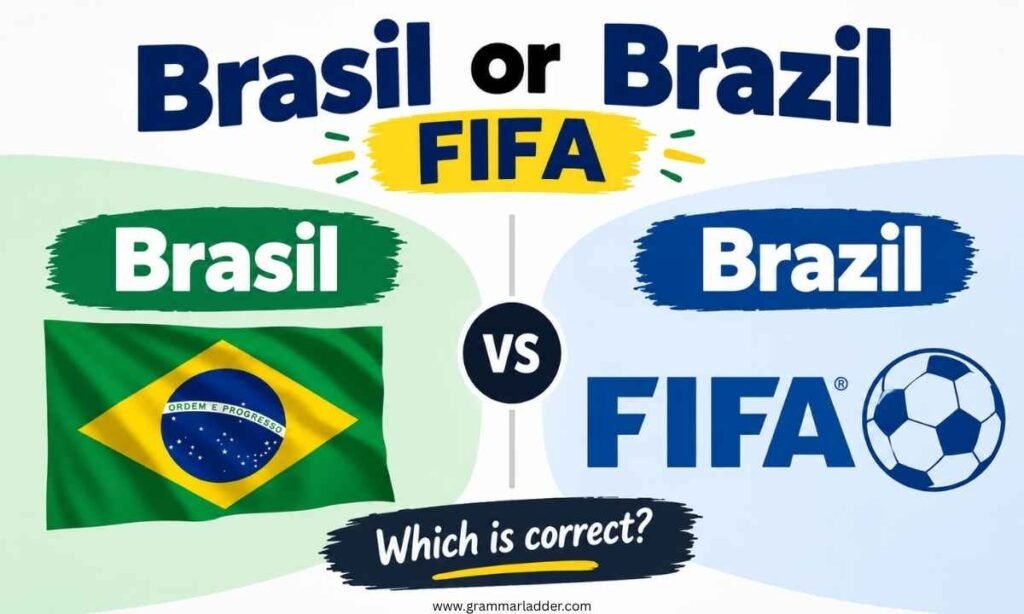
FIFA’s official English-language materials, rankings, and commentary use “Brazil,” since FIFA communicates internationally in English (among other official languages). So it’s completely normal to see “Brasil” stitched on a player’s jersey while commentators and FIFA graphics simultaneously say “Brazil” — both are correct in their own context, at the same time, in the same match.
Everyday Real-Life Examples
Seeing the spelling in action makes the rule easier to remember.
Example in News
An English newspaper headline reads: “Brazil’s Economy Grows 3% in Third Quarter.” A Brazilian Portuguese outlet reports the same story as: “Economia do Brasil cresce 3% no terceiro trimestre.”
Example in an Email
An English business email might say: “We’re expanding our operations into Brazil next year.” A Portuguese-language version sent to a local partner would read: “Vamos expandir nossas operações no Brasil no próximo ano.”
Example on Social Media
A tourist posting in English captions a photo: “Sunset in Rio, Brazil .” A local Brazilian creator posting for a Portuguese-speaking audience writes: “Pôr do sol no Rio, Brasil.”
Example in School Writing
A geography essay in English class should always say “Brazil is the largest country in South America.” A student writing the same essay in a Portuguese class would correctly write “Brasil.”
Example in Sports
Commentary in English: “Brazil advances to the semifinals.” The jersey the players wear during that same match: “BRASIL.”
Learning Tip for Students and Beginners
Here’s an easy trick that sticks: “Z” is for the “Zenglish” version. If you’re writing in English, remember the “z” belongs with English words. If the sentence around it is in Portuguese, swap to the “s” spelling automatically, the same way you’d naturally switch verb endings or word order when changing languages.
A second trick: think of the capital city. Brasília always keeps its “s,” even in English — a small reminder that Portuguese spellings survive in English text specifically for proper names and quoted phrases, but general references to the country still follow English rules.
Frequently Asked Questions
Is “Brasil” wrong in English?
Not wrong, just not standard — English writing should use “Brazil,” while “Brasil” fits Portuguese contexts or intentional branding.
Why does the football jersey say “Brasil” instead of “Brazil”?
Because it’s produced by Brazil’s own football federation, which uses the native Portuguese spelling regardless of the audience.
Is Brasília spelled differently from Brazil?
Yes — the capital keeps the Portuguese spelling “Brasília” even in English text, unlike the country name itself.
Do other languages spell it differently too?
Yes, many languages adapt the name slightly, such as “Brésil” in French, which shows this pattern isn’t unique to English.
Which spelling should I use for SEO or business content?
Use “Brazil” for English-language content, since that matches how English-speaking audiences search and read.
Is one spelling older than the other?
Portuguese “Brasil” came first, tied directly to the brazilwood tree; the English “Brazil” developed afterward through normal language adaptation.
Conclusion
At the end of the day, “Brasil or Brazil” isn’t really a debate — it’s a simple language switch. Portuguese speakers write “Brasil,” English speakers write “Brazil,” and both point to the same vibrant country, from its rainforests to its football pitches. Once you connect the spelling to the language rather than the country itself, you’ll never second-guess it again.
Whether you’re drafting an email, writing a school paper, or captioning a travel photo, just ask yourself one question: What language am I writing in? The answer settles the spelling every time.

I am an English writer with over four years of experience in grammar and language education.
Through Grammar Ladder, I share clear explanations, practical examples, and helpful English tips.
My goal is to share my knowledge so others can benefit and improve their language skills.
I believe anyone can master English with proper guidance and consistent practice.